
Life Sciences or Medicine
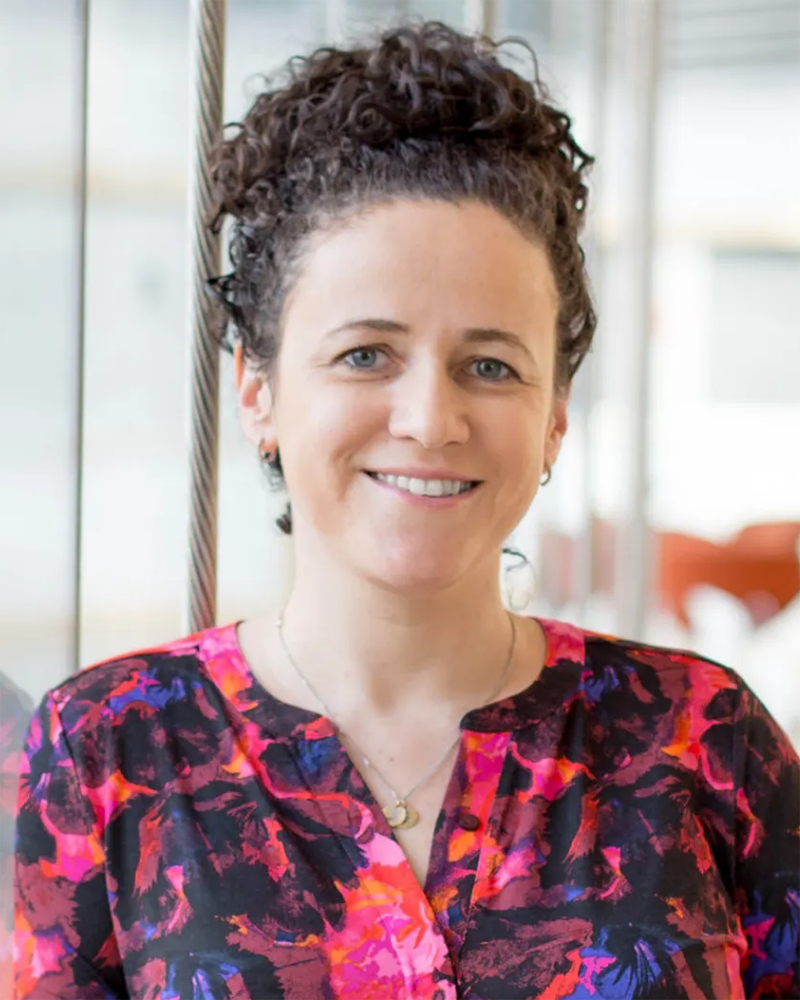
Dr. Olga G. Troyanskaya
Maduraperuma/Khot Professor of Computer Science, Princeton University
Professor, Lewis-Sigler Institute for Integrative Genomics, Princeton University
Director of Princeton Precision Health at Princeton University
Deputy Director for Genomics, Center for Computational Biology, Flatiron Institute, Simons Foundation
Award Citation
For pioneering contributions to bringing deep learning into functional genomics and establishing the foundation for modern AI-driven genomics
Biography
Education
- Stanford University Ph.D. Biomedical Informatics, 2003
- University of Richmond B.S. Computer Science and Biology, with Honors, Summa Cum Laude, 1999
Professional Appointments
- Director, Princeton Precision Health (2024–)
- Deputy Director for Genomics, Center for Computational Biology, Flatiron Institute, Simons Foundation (2016–)
- Professor, Department of Computer Science & Lewis-Sigler Institute for Integrative Genomics, Princeton University (2013–)
- Associate Professor, Princeton University (2009–2013)
- Assistant Professor, Princeton University (2003–2009)
Awards
- ISCB Innovator Award, International Society of Computational Biology, 2026
- Fellow, Association for Computing Machinery, 2020
- Fellow, International Society of Computational Biology, 2017
- Ira Herskowitz Award, Genetics Society of America, 2014
- Overton Prize, International Society of Computational Biology, 2011
and many others
Research Summary
“Non-coding regions” constitute a large portion of the human genome, and their functions remain largely unresolved. Before deep learning became widely used in the life sciences, Dr. Troyanskaya and her colleagues pioneered the use of AI to infer the regulatory functions of non-coding DNA directly from genomic sequences. DeepSEA, introduced in 2015, can predict transcription factor binding and chromatin states from genomic sequences, enabling the impact of DNA sequence variants on gene regulation in silico. This work was subsequently extended to predict the effects of DNA sequences on tissue-specific gene expression and applied to the study of diseases such as autism spectrum disorder, advancing our understanding of how non-coding variation contributes to disease. Taken together, these studies marked the beginning of a major research trend in AI-driven prediction of genome function from DNA sequences and laid the groundwork for today’s large-scale genomic AI models, including AlphaGenome.
Notes:
DeepSEA: A deep learning model that predicts regulatory activity in non-coding regions and the functional impact of DNA variants directly from DNA sequences
AlphaGenome: An AI model that integratively predicts diverse gene regulatory processes, such as gene expression and splicing, and the effects of DNA variants from DNA sequence
Selection Highlights
- Among the first to apply deep learning to the life sciences, pioneering a new field of research aimed at predicting the functional consequences of genomic sequences, including non-coding regions.
- Introduced an innovative computational framework for prioritizing potentially functional variants from the vast number of variants found in non-coding regions of the human genome.
- Enabled the systematic investigation of complex and rare genetic variation that had been difficult to address using conventional approaches. Dr. Troyanskaya and her colleagues have further applied these approaches to a wide range of diseases, including autism spectrum disorder, demonstrating their impact beyond methodological development.
- Accelerated the advancement of AI-driven genomics by making these computational tools and platforms broadly accessible to the global research community.

Award